
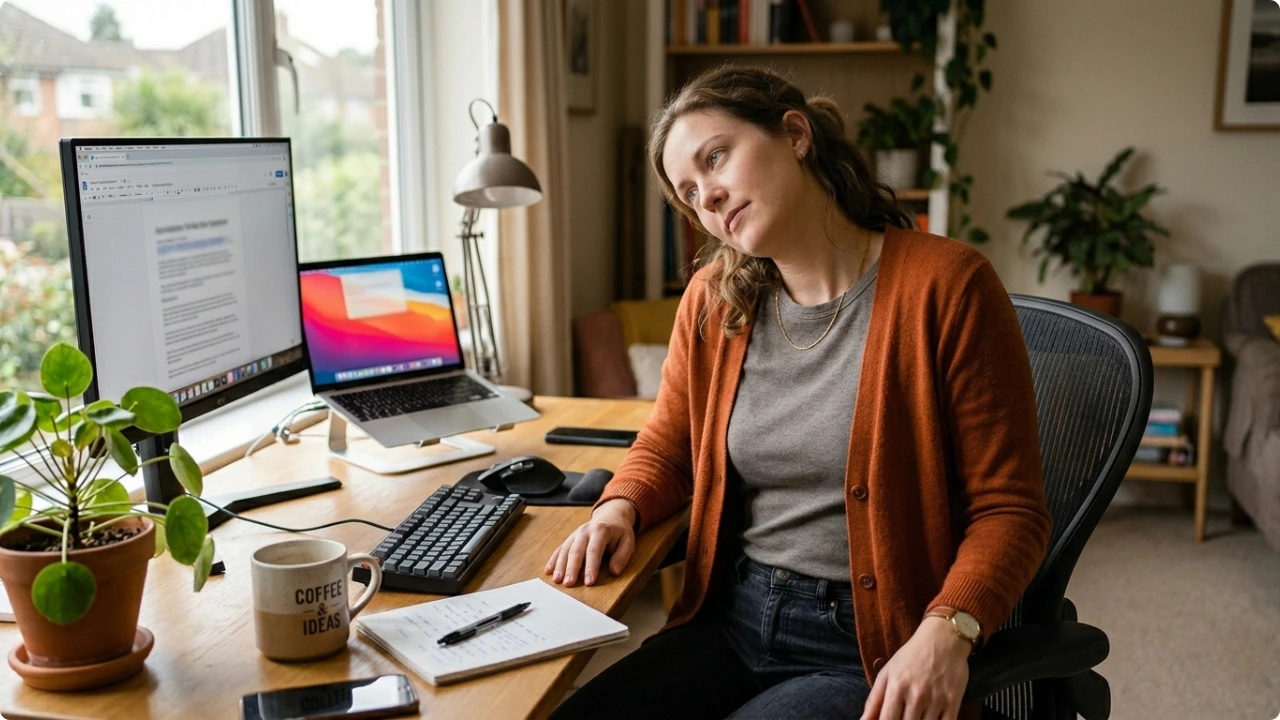
Moving at your desk is about keeping your posture upright, your circulation going, and the stiffness from sitting at bay. It’s not a workout you need to gear up for — just small, comfortable movements worked into your day.
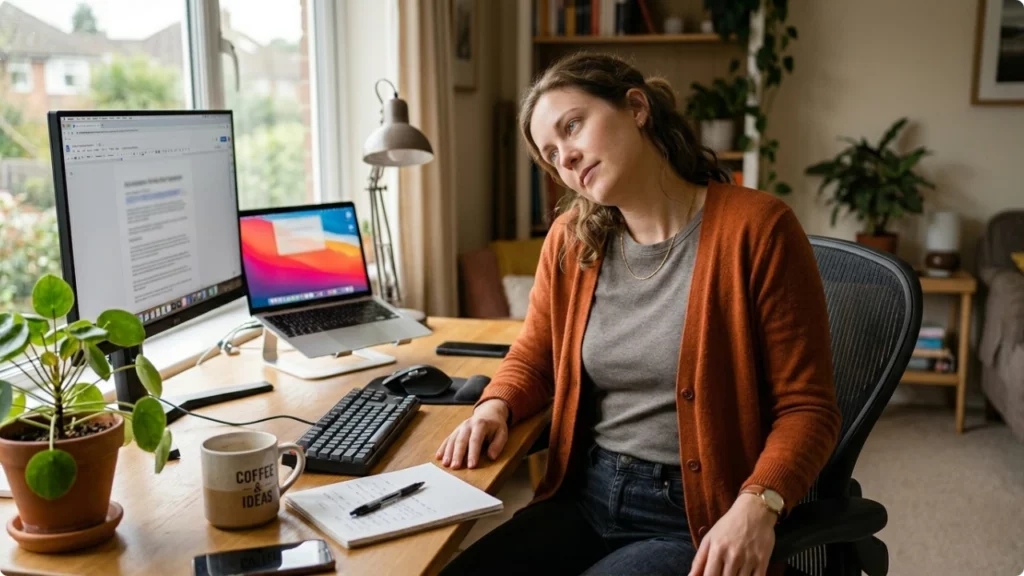
Sitting still for hours is what does the damage. Your shoulders creep up, your neck pushes forward toward the screen, your lower back settles into a slouch, and your legs go quiet for so long the circulation slows right down. By mid-afternoon you feel it — that stiff, seized-up heaviness that no amount of shifting in your chair seems to shake.
The fix isn’t a gym session. It’s movement, little and often, without needing to leave your desk. The exercises below are split into two: ones you can do seated while you carry on working, and a few standing ones for the natural pause between tasks.
Exercise While Working at Your Desk
Desk Exercises You Can Do While Working
Most of these you can do without breaking your stride — a few seconds here and there as you work through your day. None of them need you to stand up, change out of anything, or stop what you’re doing for long. The idea is to keep moving while you work at your desk, so the stiffness never gets a chance to settle in.
Pick the ones that suit you. You don’t need to do all of them, and you don’t need an order to follow.
Neck Retractions
If you spend the day leaning toward a screen, your head drifts forward without you noticing. Neck retractions pull it back over your shoulders where it belongs — you draw your chin straight back, as if making a double chin, then release. It’s a small movement and it can feel odd the first few times, so a quick demo makes it clearer than words can:
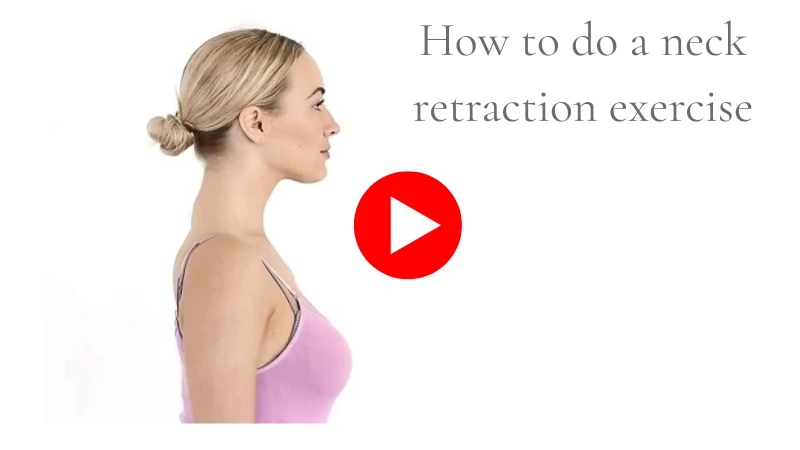
A few slow repetitions whenever you catch yourself craning at the screen is enough.
Shoulder Rolls and Shrugs
These two loosen the same area — the upper shoulders and the base of the neck, where tension gathers from hunching and using a mouse — but one is easier than the other depending on your chair.
Shoulder rolls want your arms hanging freely by your sides so your shoulders can move through a full circle. If your chair has armrests, that’s awkward. Shoulder shrugs are the better fit there: you can rest your arms on the armrests, lift your shoulders up toward your ears, hold for a second, then let them drop. Either works while you’re reading or thinking.
Seated Torso Twists
A twist brings back the rotation your spine loses from sitting square to the desk for hours. You sit tall, keep your legs and hips still, and turn your upper body gently to one side, then the other.
The catch is the chair. This is far easier on a solid chair than on an office chair with wheels — your legs are meant to stay planted and only your upper body should turn, which is hard when the seat swivels and rolls away with you. If your chair moves, plant your feet firmly and keep the twist small and controlled rather than chasing how far you can go.
Wrist and Finger Stretches
If anything on this list matters for desk work, it’s this — your wrists and forearms take the brunt of a day on the keyboard and mouse. Gentle flexor and extensor stretches help with easing the wrist pain that stems from typing too much.
Seated Leg Lifts and Ankle Circles
Your legs are where circulation slows most when you’re sat still for hours. Straightening one leg out and holding it a moment, or rolling your ankles in slow circles, gets the blood moving again — the calf working as a pump to push it back up.
Here’s the movement demostrated:
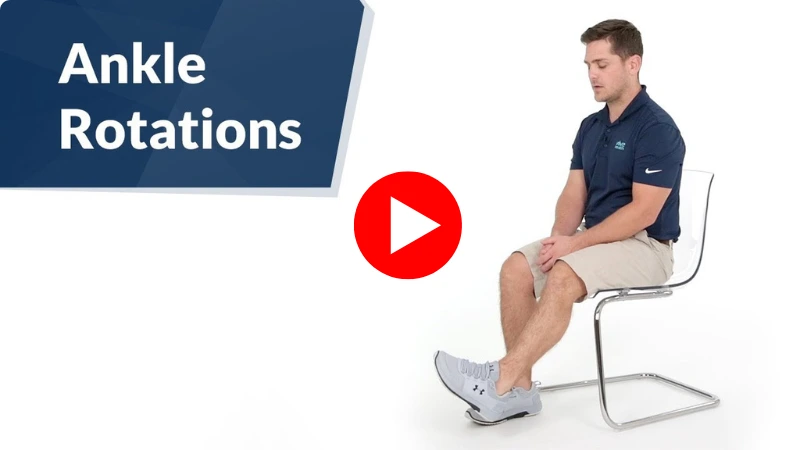
Don’t get hung up on counting repetitions. Focus on doing each one slowly and with good technique rather than racking up a number — a handful done properly beats 30 rushed reps.
Exercise Equipment to Use at Your Desk
If remembering to move is the hard part, this is where a bit of kit takes over for you. An under-desk exerciser sits in the footwell and keeps your legs going steadily while your hands and attention stay on your work.
The best under-desk exercisers that don’t interfere with your workflow let you glide on an elliptical or pedal gently, as and when, without you having to think about it or break off from a task.
Standing Exercises to Do Between Tasks
When you finish one task and before you start the next is a natural moment to get out of the chair. A few standing exercises do a lot for your posture.
These are light enough to loosen the body and reset how you’re holding yourself, without the strenuous effort of an actual workout.
Hold onto the desk for balance with any of these if you need to.
Calf Raises
Stand with your feet flat, then rise up onto the balls of your feet so your heels lift off the floor. Hold for a second at the top, then lower back down slowly. Resting a hand on the desk keeps you steady.
It’s a simple one, but standing and working the calves gets the blood moving back up your legs after a long stretch of sitting — the same circulation your seated leg movements were after, with the added benefit of your bodyweight from being on your feet.
Supported Hamstring Stretch
Tight hamstrings can pull the pelvis backwards and flatten the natural curve in your lower back, which can contribute to the lower-back tightness that comes from being seated at the desk for long periods. A gentle stretch helps ease it.
Stand facing your desk or a sturdy chair, extend one leg out in front with the heel on the floor and toes up, then hinge forward slightly from the hips until you feel the stretch down the back of the thigh. Rest your hands on the desk for support and keep it gentle — you’re easing the muscle, not straining to reach.
Standing Side Bends
This one opens out the sides of your torso, which stay compressed when you’re folded over a desk. Stand with your feet about hip-width apart, rest one hand on your hip, and reach the other arm up and over your head, leaning gently to the opposite side. You’ll feel it down the side you’re stretching away from.
Come back up slowly and switch sides. Keep the lean comfortable rather than reaching for how far you can go.