
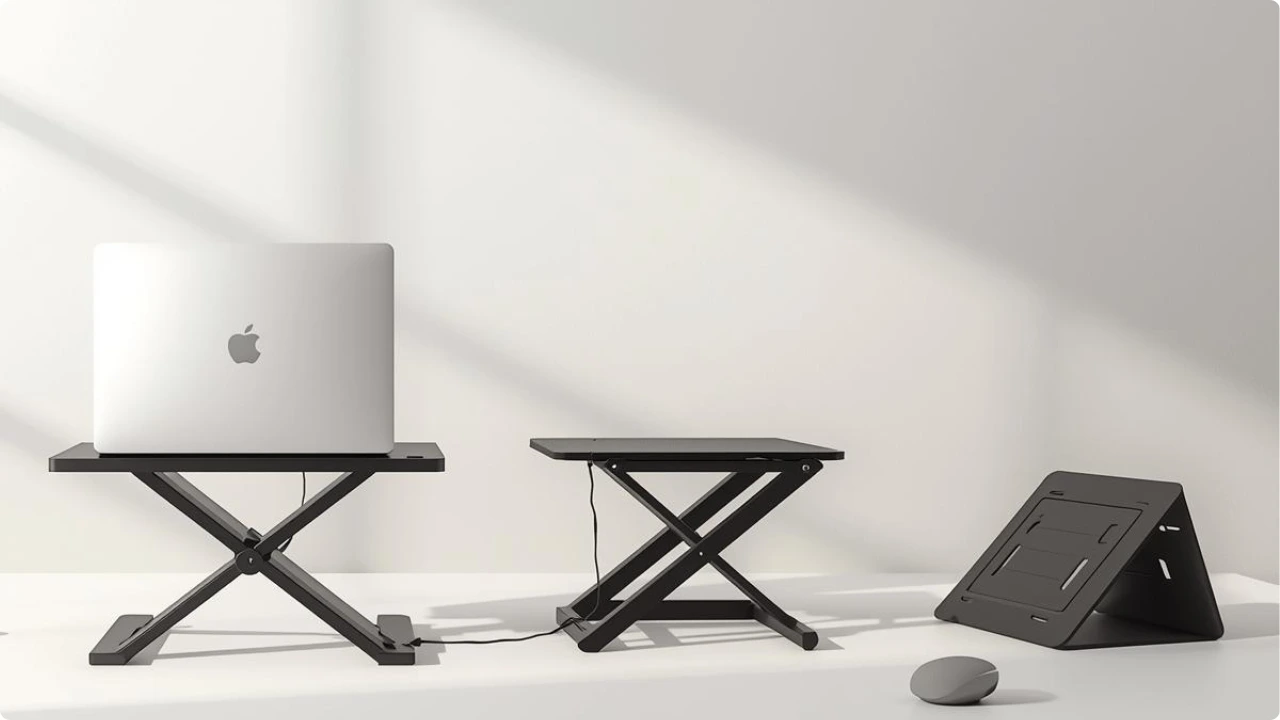
Portable laptop stands generally fall into a few common design categories, each suited to different working environments such as compact desks, travel setups, sofas, or bed use.
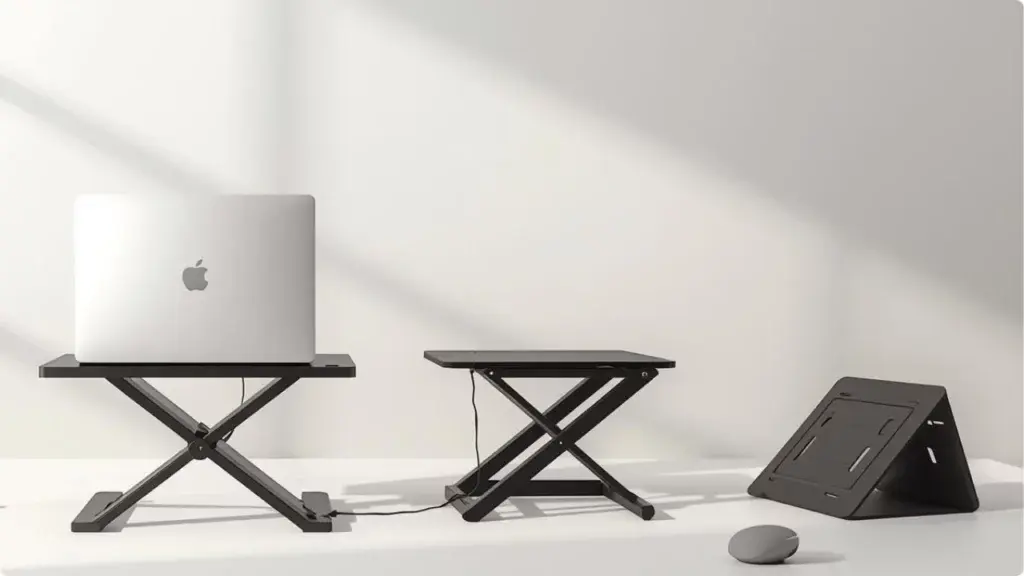
Portable stands differ in how they balance portability, adjustability, and stability. Some are designed to travel easily with a laptop, while others focus on providing a stable platform in more relaxed working environments.
Laptop stands are designed to raise or tilt the screen, which can help reduce the need to bend your neck downward while working. Different stand designs achieve this in different ways — some raise the laptop higher to bring the screen closer to eye level, while others simply tilt the keyboard to improve typing angle and airflow.
If you’re wondering how much difference this actually makes, it helps to understand whether portable laptop stands improve posture before comparing the different stand styles.
Why People Use Portable Laptop Stands
Portable laptop stands are typically used to improve screen positioning, adjust typing angles, or adapt a laptop setup when a traditional desk environment isn’t available. The exact benefits depend on the stand design and how the laptop is being used, particularly when portability is a priority.
Factors such as the stand weight, stability, and compatibility with external keyboards can also influence which stand design works best.
The Most Common Types of Portable Laptop Stands
The most common portable laptop stand designs include ultra-portable folding stands, adjustable scissor stands, desk-focused riser stands, and larger laptop tables designed for sofas or bed use.
Ultra-Portable Laptop Stands
Slim folding riser stands are one of the most common portable designs. They typically use lightweight aluminium and fold flat when not in use, making them easy to carry in a laptop bag or store in a drawer.
Many of the best portable laptop stands for travel and compact desks use this fold-flat design because it provides screen elevation without adding much bulk.
Slim Folding Riser Stands
Slim folding stands are among the most common portable designs. They usually use lightweight aluminium and fold flat when not in use, making them easy to store in a laptop bag or drawer.
Foldable laptop stands are often considered a practical option for travel or compact desks because they provide modest screen elevation while remaining easy to carry.
Features
- Thin fold-flat design
- Lightweight materials
- Slight screen lift for desk setups
Best for
- Compact desks
- External keyboard setups
- Travel-friendly workspaces
Limitations
- Limited height adjustment
- Not ideal for uneven surfaces
Adhesive or Attach-to-Laptop Stands
These ultra-thin stands attach directly to the underside of the laptop and fold out when needed.
Features
- Permanently attached to the laptop
- Very thin profile
- Quick setup
Best for
- Frequent travellers
- Temporary workspaces
- Café or hot-desk environments
Limitations
- Minimal height adjustment
- Less stable than separate stands
Hybrid Sleeve-Stands
Some laptop sleeves are designed to unfold into a raised stand, combining protection with portability.
Features
- Laptop sleeve + stand design
- Lightweight travel option
- Moderate screen elevation
Best for
- Travel setups
- Minimalist workspaces
Limitations
- Less rigid than dedicated stands
- Limited adjustability
Adjustable Portable Laptop Stands
These stands prioritise adjustability rather than ultra-thin portability. They usually include folding frames or articulated mechanisms that allow the laptop to be raised higher or positioned at different viewing angles.
Compact Collapsible “Scissor” Stands
Scissor-style stands use an adjustable folding frame that allows the laptop to be raised higher than simple riser stands.
Features
- Multiple height settings
- Folding frame design
- Improved screen positioning
Best for
- Desk setups needing better screen height
- External keyboard use
- Adjustable viewing angles
Limitations
- Slightly bulkier than flat folding stands
- Some lightweight models may wobble
Desk-Focused Laptop Stands
Some portable stands are designed primarily for desk use rather than travel. These designs tend to prioritise stability and screen elevation over compact folding.
Fixed-Angle Wedge Stands
Wedge stands are simple angled platforms that tilt the laptop without adjustable mechanisms.
Features
- Solid angled design
- No moving parts
- Stable platform
Best for
- Basic desk setups
- Improving typing angle
Limitations
- Limited height adjustment
- Less portable than folding stands
Vertical Laptop Stands
Vertical stands hold a laptop upright when it is connected to an external monitor.
Features
- Vertical laptop storage
- Space-saving desk design
- Often aluminium or metal construction
Best for
- Docked laptop setups
- External monitor workstations
Limitations
- Not used while actively typing on the laptop
- Requires external keyboard and display
Laptop Stands for Sofas, Beds, or Relaxed Workspaces
Certain laptop stands are built for casual environments where a traditional desk setup isn’t viable. These designs usually provide a wider platform or support surface for use on sofas or beds.
Portable Laptop Tables / Bed Desks
Laptop tables and lap desks provide a stable surface for using a laptop on sofas or beds.
Features
- Larger surface area
- Foldable legs or cushioned bases
- Designed for comfort
Best for
- Sofa use
- Bed use
- Casual laptop sessions
Limitations
- Too large for compact desks
- Not designed for ergonomic desk posture
Sit-Stand Portable Laptop Desks
Mini portable desks allow the laptop to be raised high enough for occasional standing work.
Features
- Adjustable legs
- Large work surface
- Can support a laptop and accessories
Best for
- Flexible workspaces
- Temporary standing setups
Limitations
- Bulkier than typical portable stands
- Less suitable for travel
Portable Laptop Stands Comparison
| Type | Best For | Portability | Stability |
| Slim folding | Compact desks | Excellent | Good |
| Scissor | Adjustable height | Good | Moderate |
| Adhesive | Travel | Excellent | Low |
| Sleeve | Travel protection | Excellent | Moderate |
| Wedge | Desk tilt | Moderate | High |
| Vertical | Docked setups | Moderate | High |
| Laptop table | Sofas / beds | Low | Moderate |
Conclusion
Understanding the different types of portable laptop stands makes it easier to match the design to your workspace. Ultra-portable folding stands prioritise travel and compact desks, adjustable stands provide greater screen positioning flexibility, while larger laptop tables are better suited to sofas or relaxed work environments.
Choosing the right design depends less on the stand itself and more on where and how the laptop will be used.