
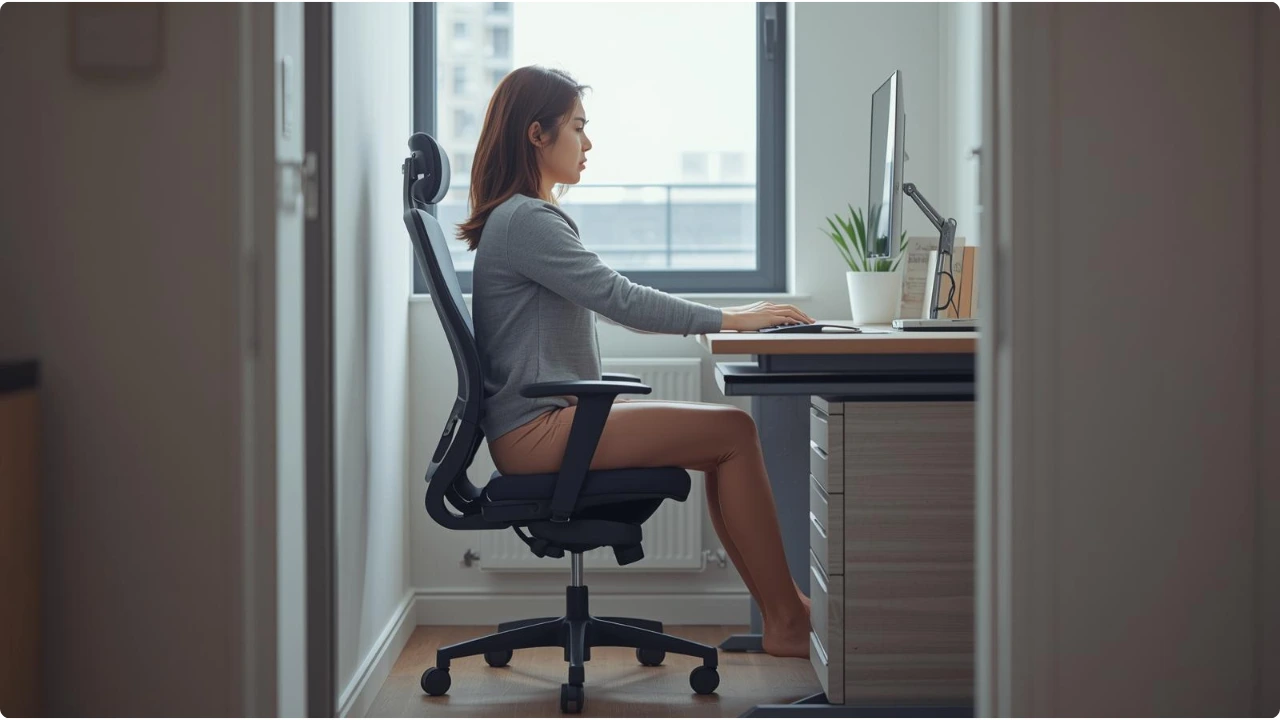
Looking for thin office chair cushions that won’t raise you too high under a small desk? These three low-profile picks focus on minimal height increase, subtle support, and compact compatibility.
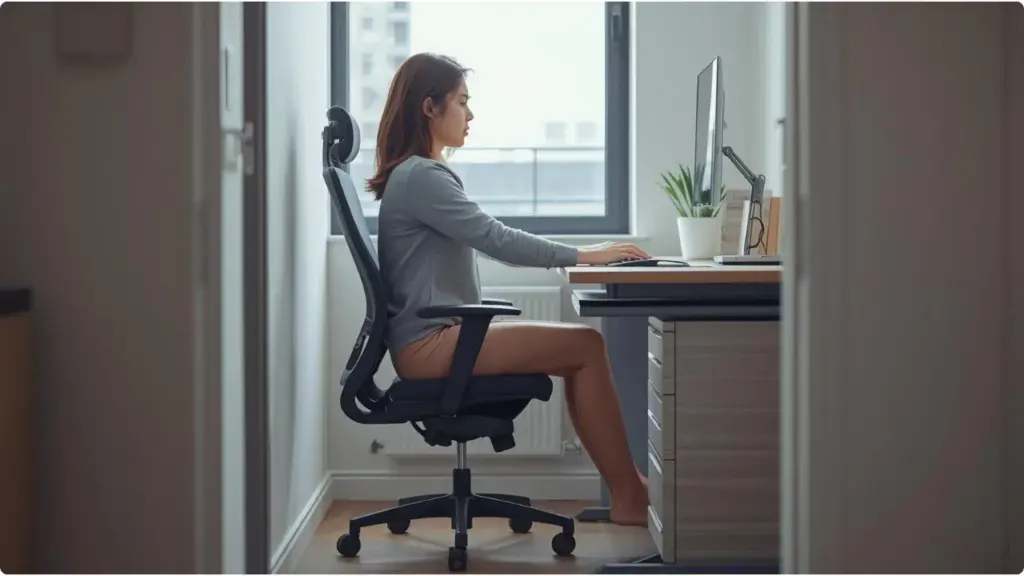
Small desks leave less margin for adjustment. Limited leg space, fixed-height surfaces, and built-in drawers or trays can all affect how your chair sits relative to the desk.
Raise your chair to meet desk height, and your knees may sit too close to the underside. Lower it, and the seat can start to feel hard over long sessions.
A low-profile seat cushion can add support without dramatically increasing seat height — helping you stay comfortable in compact setups where clearance matters.
Find the Best Thin Office Chair Cushions for Small Desks
Best Thin Memory Foam Cushion
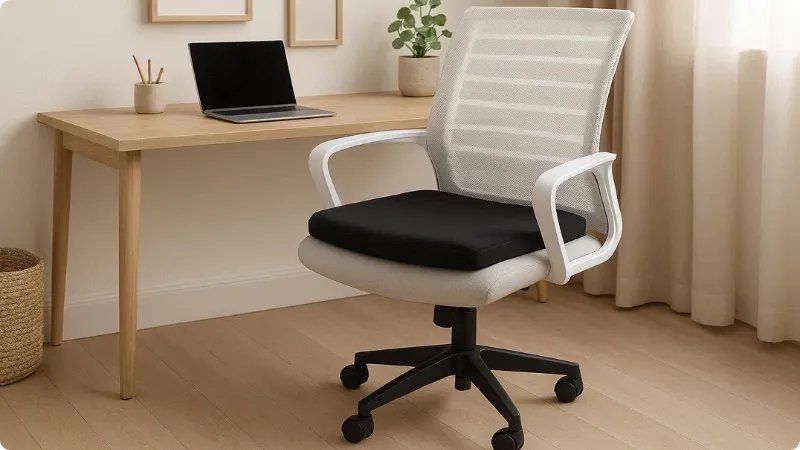
Amazon Basics Square Memory Foam Seat Cushion
View on AmazonBest for:
Users who want minimal seat height increase in compact desk setups.
Why this stands out
This is a genuinely low-profile option at 3 cm thick. The memory foam compresses under load, adding light cushioning without noticeably raising your chair height. For small desks where knee clearance is limited, that subtle lift matters.
Desk compatibility
Works best on standard office chairs with existing padding. Because it’s flat and square, it suits structured seat bases more than deeply contoured designs. Its slim profile makes it one of the safest options for tight under-desk clearance.
Pros
- Very low 3 cm profile
- Compresses under body weight
- Lightweight and easy to reposition
- Removable zip cover
- Budget-friendly option
Limitations
- May feel too thin for worn-out or very firm chairs
- Softer feel won’t suit users seeking firm structural support
- Not designed for posture correction
Key specs
- Dimensions: 37.6 × 38 × 3 cm
- Shape: Square
- Material: Viscoelastic memory foam
- Cover: Removable polyester zip cover
- Profile: Flat
Verdict
A practical choice if your priority is preserving desk clearance while adding light cushioning. It won’t dramatically change your seating height, making it well suited to compact desks and fixed-height work surfaces.
Check today’s price on AmazonBest Low-Profile Gel Cushion
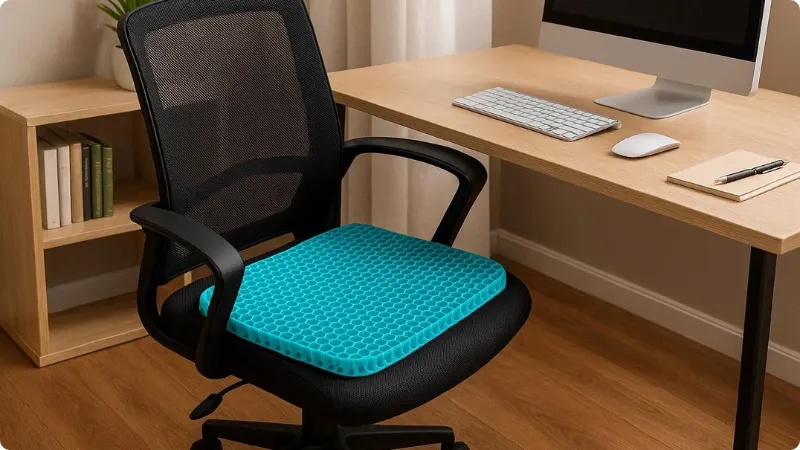
JML Soft Sitter Honeycomb Cushion
View on AmazonBest for:
Users who want a breathable, low-profile cushion that redistributes pressure without noticeably increasing seat height.
Why this stands out
Unlike memory foam, the honeycomb gel structure compresses more directly under load while maintaining airflow. That makes it a practical option if your chair feels firm but you don’t want to add significant vertical lift in a compact desk setup.
Desk compatibility
Its relatively slim profile makes it suitable for standard office chairs where knee clearance is limited. Because the gel collapses under weight, it tends to add less effective height than thicker foam cushions. Best suited to flat or lightly padded seat bases rather than deeply contoured chairs.
Pros
- Breathable honeycomb structure reduces heat buildup
- Compresses under load for subtle height impact
- Removable washable cover
- Well-established UK brand with strong review base
Limitations
- Gel cushions can feel firmer than soft foam
- Some reports of splitting over long-term heavy use
- Slightly heavier feel compared to thin foam pads
Key specs
- Design: Honeycomb gel structure
- Profile: Low-profile flat cushion
- Cover: Removable washable cover
- Shape: Rectangular
- Material: Gel
Verdict
A practical alternative to memory foam if airflow and pressure distribution matter more to you than plush softness. It maintains a relatively low seating profile, making it suitable for compact desks where preserving clearance is still a priority.
Check today’s price on AmazonBest Low-Profile Gel Grid Cushion
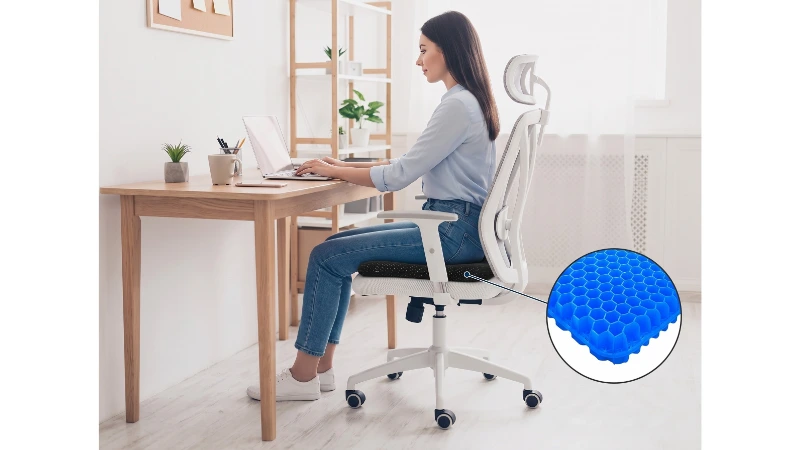
Helishy Gel Seat Cushion (Honeycomb Grid)
View on AmazonBest for:
Anyone who wants pressure spread and airflow rather than plush padding, and needs the cushion to stay out of the way of limited desk clearance.
Why this stands out
Memory foam and solid gel both compress as a single mass — you sink into them. This one doesn’t. The honeycomb grid is an open structure of gel columns that buckle individually beneath the heaviest points while staying supportive everywhere else, so you get relief where you’re actually loading the seat without dropping into the cushion.
That structure is also why it stays low. The resting height is 4.2 cm, but it collapses substantially under body weight making it ideal for compact desks with limited clearance for your knees.
The open cells also mean air moves through it.
Pros
- Compresses to roughly 2–2.5 cm of effective lift despite the 4.2 cm resting height
- Open honeycomb structure keeps air circulating
- Firm edges
Limitations
- The grid pattern can leave a temporary imprint on skin through thin clothing
- At 41.9 × 36.8 cm it won’t cover a wide seat base edge to edge
- Springy and firm rather than soft — the wrong feel if you want cushioning
- Not a solution for clinical pain; despite the marketing claims
Key specs
- Dimensions: 41.9 × 36.8 × 4.2 cm (16.5 × 14.5 × 1.65 in)
- Profile: Flat, 4.2 cm at rest
- Material: Elastic gel, honeycomb grid structure
- Cover: Removable non-slip cotton, zip, machine washable
- Weight: Approx. 1.1 kg
- Shape: Rectangular
Verdict
This is ideal if your chair feels firm and you’d rather something softer with a bit of cushioning and more breathable. Despite being on the thin side, it provides some pressure relief without sacrificing desk clearance.
Ultimately, it’s a comfort cushion for ordinary long-sitting discomfort, not a therapeutic device — set that expectation and it does the job well. The trade-off is feel: springy and structural, with a grid texture that some people notice on their skin.
Worth noting: the cover’s grip is from tiny silicone dots, which hold well on fabric seats but can slide on leather or mesh. If your chair is fabric, it’ll stay put; on smooth surfaces, don’t count on it.
Check today’s price on AmazonChoosing an Office Chair Seat Cushion Based on Your Setup
When choosing an office chair seat cushion, start by selecting the type that’s best suited to what you’re trying to fix. Sizing can come later once you know the type.
- If your chair already feels slightly too high under your desk, choose the thinnest flat cushion available. Low-profile memory foam or gel pads typically add around 1–2 cm of effective seated height once in use.
- If your seat feels firm but clearance is limited, a flat gel cushion can redistribute pressure without noticeably raising your position.
- If your desk height can’t be adjusted and you feel like you’re sliding back or rounding your lower back, a wedge cushion may help — but only if you have enough clearance to accommodate the added rear height.
Like most low-profile cushions, foam and gel materials soften slightly during long sitting sessions and regain shape once weight is removed.
- Best Thin Memory Foam Cushion: Amazon Basics Square Memory Foam Seat Cushion
- Best Low-Profile Gel Cushion: JML Soft Sitter Honeycomb Cushion
- Best Low-Profile Gel Grid Cushion: Helishy Gel Seat Cushion (Honeycomb Grid)
Frequently Asked Questions
Should you use a cushion on an office chair?
A cushion can help if your chair feels too firm, slightly too low, or uncomfortable during long sessions. In small desk setups, the key is choosing a low-profile option that doesn’t significantly raise your seated height. Thicker cushions can reduce knee clearance under fixed-height desks.
Are seat cushions good for office chairs?
They can be, particularly if replacing the chair isn’t practical. A well-sized cushion can improve comfort and pressure distribution. For compact desks, slim designs are usually more suitable than bulky orthopaedic-style pads.
Which is better, memory foam or gel seat cushion?
Different types of office chair seat cushions serve different uses and feel different from a comfort perspective.
Which is better depends on what you’re trying to improve.
– Memory foam tends to feel softer and more traditional.
– Gel cushions allow more airflow and often feel slightly firmer on the surface.
Both compress under body weight. In low-profile versions, they typically add only around 1–2 cm of effective seated height once in use.
Do seat cushions raise your sitting height?
Yes — but usually less than the stated thickness suggests.
Most low-profile foam and gel cushions compress once you sit on them. A 3 cm cushion typically raises your seated height by closer to 1–2 cm in practice. Wedge cushions increase rear height more noticeably and require more desk clearance. Accurate measurements for office chair cushion sizes can prevent common problems arising.
How can I make my office chair more comfortable?
Start by checking chair height relative to your desk. If your seat feels hard but your height is correct, a thin cushion may help. If your desk height can’t be adjusted and you feel like you’re slouching, a subtle wedge cushion may improve seat angle — provided you have enough under-desk clearance.
Regular movement throughout the day also makes a difference. Even the best cushion won’t replace changing position periodically.
Should I put a pillow on my office chair?
Standard household pillows are often too thick and unstable for desk use. They can raise your seat height too much and shift during the day. Low-profile office chair seat cushions are designed to compress under load and stay more stable on flat chair bases.