
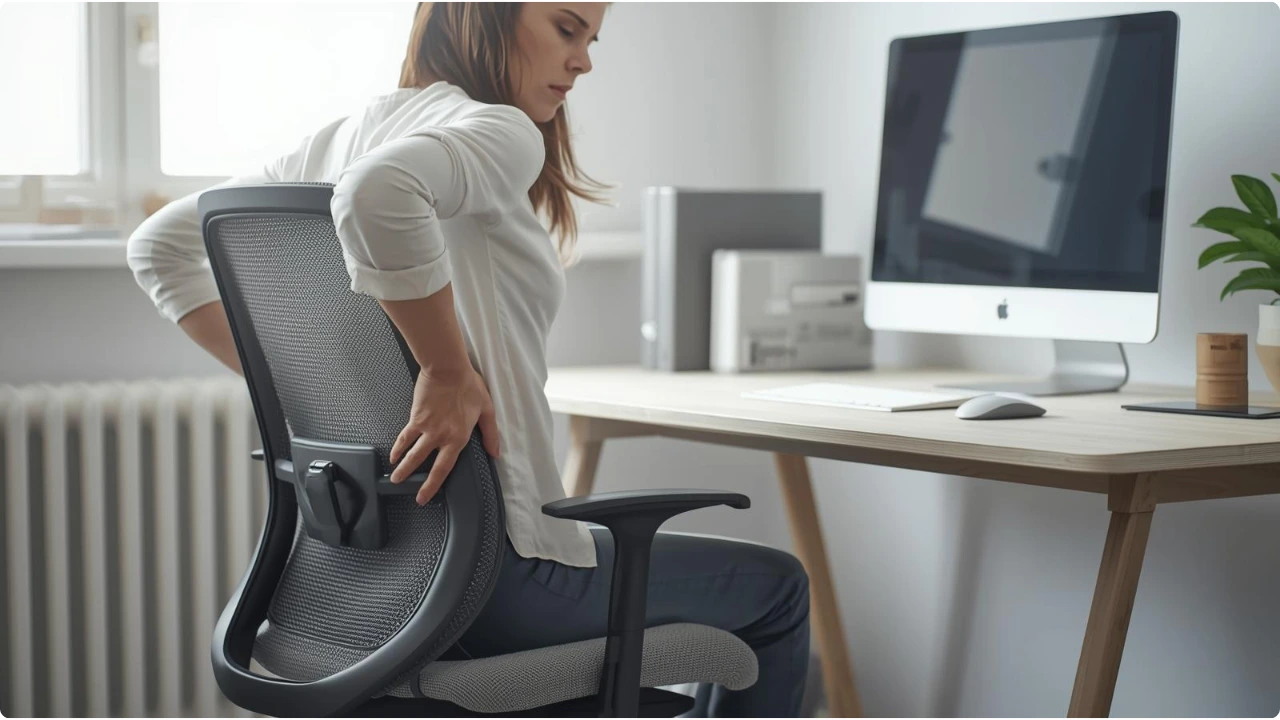
It can — but only in the right context.
A seat cushion doesn’t just add comfort; it changes how you sit, and that shift can either reduce strain on your back or quietly make it worse.
Seat cushions are often presented as a simple fix for back discomfort during long hours at a desk. Some people report relief almost immediately. Others find their posture feels less stable or their pain shifts elsewhere.
The difference usually isn’t about softness or price. It comes down to how the cushion alters seat height, pelvic position, and overall alignment within the chair.
How Seat Cushions Affect Back Alignment
How Office Chair Positioning Affects Your Back
Most back discomfort linked to desk work doesn’t start with the back itself — it starts with how the pelvis sits on the chair.
When you sit in an office chair, your pelvis either tilts slightly forward (which helps maintain the natural curve of the lower spine) or rolls backward into a slouched position. That shift changes how the lumbar spine is loaded.
Over time, a flattened lower back, unsupported hips, or uneven pressure across the seat can contribute to stiffness or pain.
Seat firmness also plays a role. A chair that feels too hard can create pressure around the tailbone and hips, encouraging subtle posture changes that strain the lower back. A seat that’s too soft can allow the body to sink, reducing spinal support.
Although upper back discomfort is common in desk setups, it’s usually linked to screen height, arm positioning, or lack of thoracic support rather than the seat base itself.
A seat cushion primarily affects the pelvis and lower spine — so its impact depends on whether it improves that base position.
How a Seat Cushion Changes Your Sitting Position
Adding a seat cushion changes your sitting geometry.
First, it raises overall seat height. Even a 4–6 cm cushion alters the angle at your hips and knees. If the chair isn’t adjusted to compensate, that shift can affect how the lower spine is supported.
Second, it alters pressure distribution. A firm, flat cushion spreads weight more evenly across the hips. A soft or highly contoured cushion allows the body to sink into specific areas. Depending on the design, that can either stabilise posture or reduce support.
Shape also matters.
- A wedge cushion introduces a gentle forward tilt.
- A coccyx (U-shaped) cushion removes direct pressure from the tailbone.
- A flat memory-foam pad mainly adds padding without dramatically changing angle.
Each design interacts differently with the chair’s original structure.
When a Seat Cushion Can Help Back Pain
A seat cushion is most likely to help when discomfort is linked to pressure, positioning, or prolonged sitting rather than structural injury.
If the seat feels too firm, added padding can reduce concentrated pressure around the hips and tailbone. That reduction can make it easier to sit upright without constant shifting.
If posture tends to collapse into a slouched position, a slightly firmer or gently angled cushion may help maintain more neutral alignment.
For people who experience tailbone sensitivity when sitting, a coccyx-style cushion that removes direct pressure from the rear of the seat can reduce discomfort without affecting the backrest.
Cushions can also help when a chair’s padding has worn down. Restoring firmness to the seat base may allow the backrest and lumbar support to function more effectively.
In each case, the benefit comes from improving sitting position — not from the cushion directly “treating” back pain.
When a Seat Cushion Can Make Back Pain Worse
A seat cushion can introduce problems if it changes sitting position without other adjustments.
The most common issue is added height. Even a thin cushion raises the hips. If the chair isn’t lowered to compensate, pressure can shift into the lower back. In fixed-height desk setups, this may also reduce clearance under the desk and subtly alter posture.
Excessively soft cushions can allow the body to sink and lose spinal support. While they may feel comfortable initially, that collapse can increase strain during long sitting sessions.
Very thick cushions can interfere with the chair’s original design. Office chairs are built with a specific seat depth, backrest angle, and lumbar position. Adding too much padding can push the body forward away from the backrest or misalign built-in support.
If discomfort stems from poor monitor height, unsupported arms, or inadequate backrest support, a seat cushion won’t address the root issue — and may complicate it.
The key variable is alignment, not comfort alone.
Which Type of Seat Cushion Is Most Likely to Help?
Not all seat cushions affect posture in the same way. The design determines whether the pelvis is supported, tilted, or simply padded.
- Flat memory-foam cushions improve comfort by spreading pressure more evenly across the seat. They don’t significantly change pelvic angle, which makes them a safer option when the chair already supports the lower back but feels too firm.
- Coccyx (U-shaped) cushions remove direct pressure from the tailbone. These are more targeted and tend to help when pain is localised at the rear of the seat rather than spread across the lower back.
- Wedge cushions introduce a gentle forward tilt. By slightly elevating the hips, they can encourage a more neutral spinal position — though they also alter seating angle and should be used with proper chair adjustment.
Understanding the different types of office chair seat cushions helps clarify why one design may relieve discomfort while another makes it worse. The effect isn’t just about softness or thickness, but about how the cushion interacts with your overall setup.
In setups where maintaining seat height is important, thinner or low-profile designs tend to cause fewer alignment issues than thick, heavily padded options.
Seat Cushion vs Lumbar Support: How They Affect Your Back Differently
Seat cushions and lumbar supports influence different parts of your sitting posture.
- A seat cushion changes how the pelvis rests on the chair. By altering seat firmness, pressure distribution, or tilt angle, it affects the position of the hips — which in turn influences the lower spine.
- A lumbar support cushion works higher up. It fills the natural curve of the lower back and encourages the spine to maintain its inward arch against the backrest.
If discomfort feels like pressure at the tailbone or stiffness that develops after sitting on a firm seat, the issue is often at seat level. If the pain feels like muscular fatigue or collapse in the lower spine while leaning back, backrest support is usually more relevant.
Improving seat positioning and lumbar support together often produces better results than adjusting one in isolation.
How to Tell If a Seat Cushion Is Worth Trying in Your Setup
Before adding a seat cushion, identify what is causing the discomfort.
If the chair feels hard and pressure builds around the hips or tailbone after an hour or two, additional padding may improve comfort without significantly changing posture.
Check your hip and knee angle. Your hips should sit roughly level with or slightly higher than your knees, with feet flat on the floor. If adding a cushion would raise you noticeably higher — especially in a fixed-height desk setup — it may introduce alignment issues unless the chair can be adjusted.
Pay attention to where pain develops:
- Tailbone pressure often points toward seat-level discomfort.
- A broad band of lower-back stiffness may relate to pelvic position or lumbar support.
- Upper back fatigue is more commonly linked to monitor height or arm positioning rather than the seat itself.
If your chair’s lumbar support already aligns well but the seat padding has compressed over time, a thin or low-profile cushion may restore comfort without disrupting the chair’s design.
A seat cushion is most effective when it addresses a clearly defined issue. If the source of discomfort is unclear, adjusting chair height, backrest angle, or desk setup may be the better first step.